Let me paint you a picture: It’s 2022, I’m three months into my digital nomad journey, and I’m sitting in a hostel in Bangkok realizing I can’t tie my shoes without getting winded. I’d gained like 15 pounds eating pad thai and street food, hadn’t worked out since leaving New York, and felt like absolute garbage despite living what was supposed to be this “dream lifestyle.”
The gym memberships back home? Cancelled. My workout routine? Non-existent. My excuses? Absolutely endless. “I’m traveling, I don’t have access to equipment, the hostels don’t have gyms, I’m too busy exploring”—you name it, I said it.
Here’s what nobody tells you about the nomad life: it’s way easier to let your fitness completely fall apart than it is to maintain it. You’re constantly in new places, your routine is chaos, and there’s always some new food to try or some adventure that seems more important than a workout.
But after spending two years figuring this out across 20+ countries, I’ve actually gotten in the best shape of my life without setting foot in a traditional gym. No expensive memberships, no fancy equipment, just systems that work whether I’m in Lisbon or Lima.
Real talk: this isn’t some fitness influencer BS. I’m not shredded, I’m not trying to sell you supplements, and I definitely still eat way too much pizza. But I’m consistent, I feel good, and I’m not slowly deteriorating into a blob who happens to work from cool locations. That’s the goal.
The Mental Shift That Actually Matters
Before we get into the how, we need to talk about the mindset shift that made everything click for me.
Stop trying to replicate your gym routine from back home. Seriously. Let it go. That perfectly organized split where you hit chest on Monday and legs on Friday? That’s not happening when you’re moving cities every few weeks and dealing with jet lag.
Instead, your new goal is simple: move your body consistently, even if it’s not perfect. A 20-minute bodyweight workout in your Airbnb is infinitely better than skipping because you can’t get to a gym. A run through a new city beats sitting on your laptop for 12 hours straight.
Once I stopped trying to maintain some elaborate fitness routine and just focused on doing something almost every day, everything got easier. Some days that’s a full workout, some days it’s literally just 20 pushups and a walk. Both count.
Bodyweight Training: Your New Best Friend
The Basics That Actually Work
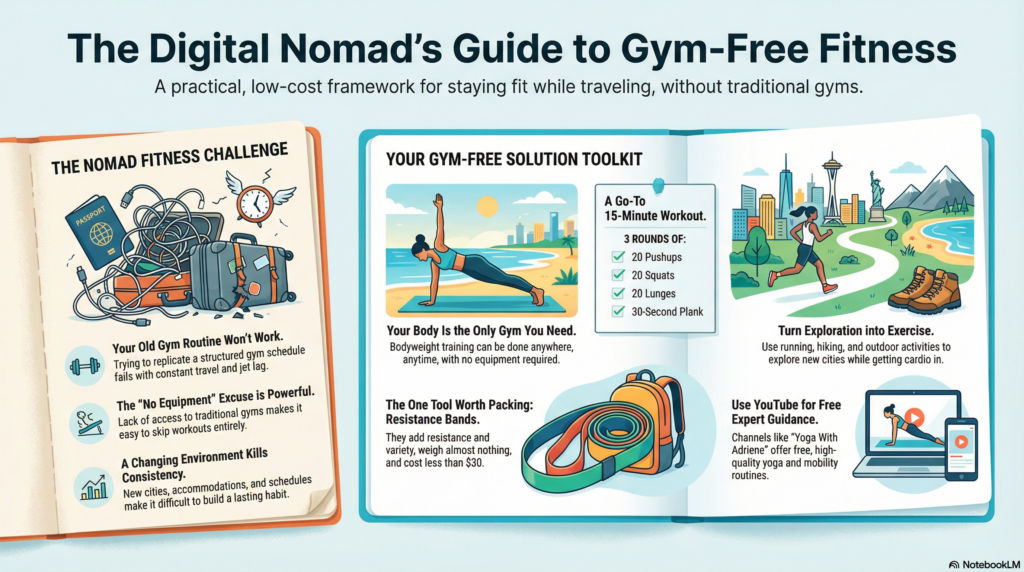
Bodyweight training is clutch for nomad life because you can do it literally anywhere. Hotel room, hostel common area, park, beach—doesn’t matter. Your body is the only equipment you need.
I started with the basics: pushups, squats, lunges, planks, and pullups (when I could find something to hang from). Sounds simple, and it is. That’s the point.
Here’s my go-to routine when I’m in a new place and don’t know where anything is:
- 3 rounds of: 20 pushups, 20 squats, 20 lunges (10 each leg), 30-second plank
- Takes maybe 15 minutes
- Requires zero equipment
- Works your entire body
- Can be done in your underwear at 6 AM without annoying your roommates too much
Is it the most optimized workout ever? No. Does it keep you functional and not feeling like trash? Absolutely.
Progressive Overload Without Weights
The thing with bodyweight training is you need to make it harder over time, or you’ll plateau hard. I learned this after doing the same pushup routine for three months and wondering why nothing was changing.
Ways to progress without adding weight:
- Slow down the tempo (3 seconds down, 3 seconds up)
- Add pauses at the bottom
- Try harder variations (regular pushups → diamond pushups → one-arm progressions)
- Increase reps or rounds
- Decrease rest time
I started doing pistol squat progressions (one-legged squats) because regular squats got too easy, and holy hell, those will humble you real quick. Six months later and I still can’t do a full pistol squat without holding onto something, but that’s the journey.
Apps That Don’t Suck
I’m not huge on fitness apps because most of them are overcomplicated or trying to sell you a subscription, but a few are actually useful:
Nike Training Club is completely free and has solid bodyweight workout programs. I used their 4-week beginner program when I first started and it was perfect for getting back into a routine.
Calisthenics & Bodyweight has good progression programs if you want to work toward skills like handstands or muscle-ups. More advanced, but the free version has enough content to keep you busy for months.
FitBod ($10/month) is the one paid app I actually use. It creates custom workouts based on what equipment you have access to (including “no equipment”), tracks your progress, and adjusts over time. Worth it if you want structure without thinking too much.
Finding Equipment Abroad (Or Making Your Own)
Pullup Bars Are Everywhere If You Look
Once you start looking, you’ll find pullup bars in the weirdest places. Parks usually have them—especially in places like Mexico, Colombia, and Thailand where outdoor gyms are common. Random street workout stations, playgrounds, even sturdy tree branches in a pinch.
I’ve done pullups on door frames (not recommended unless you’re light and it’s a solid frame), scaffolding (also sketchy), and once on a really sturdy clothing rack in my Airbnb (definitely not recommended, but desperate times).
Pro tip: Google Maps search for “outdoor gym” or “calisthenics park” in whatever city you’re in. You’d be surprised how many places have free outdoor workout spaces with actual equipment.
Resistance Bands Changed Everything
Okay, this is the one piece of “equipment” I recommend buying. A set of resistance bands costs like $15-30, weighs basically nothing, and fits in any backpack.
I resisted (pun intended) getting them for way too long because I thought they were some fitness gimmick. Wrong. They’re incredibly versatile and add so much variety to bodyweight workouts.
I use them for:
- Adding resistance to squats and lunges
- Pullup progressions (loop it around a bar for assistance)
- Face pulls and other back exercises
- Stretching and mobility work
The compact, fabric ones from brands like Fit Simplify are solid. Avoid the cheap rubber ones that snap and hit you in the face (learned that the hard way in a hostel in Portugal).
DIY Solutions That Work
Before I bought resistance bands, I got creative with what was around:
A backpack filled with water bottles or books makes a decent weight for squats and weighted pushups. Is it awkward? Yes. Does it work? Also yes.
Water jugs (the big 5-gallon ones) in some Airbnbs can be used for farmer’s carries or overhead presses if you’re careful.
Chairs and couches are perfect for tricep dips, elevated pushups, and step-ups.
Towels can be used for slider exercises on smooth floors or as a makeshift suspension trainer if you’re creative.
You look ridiculous doing this stuff, but when you’re in a tiny apartment in Budapest with no gym access, you adapt.
Running: The Most Accessible Exercise
Exploring Cities Through Running
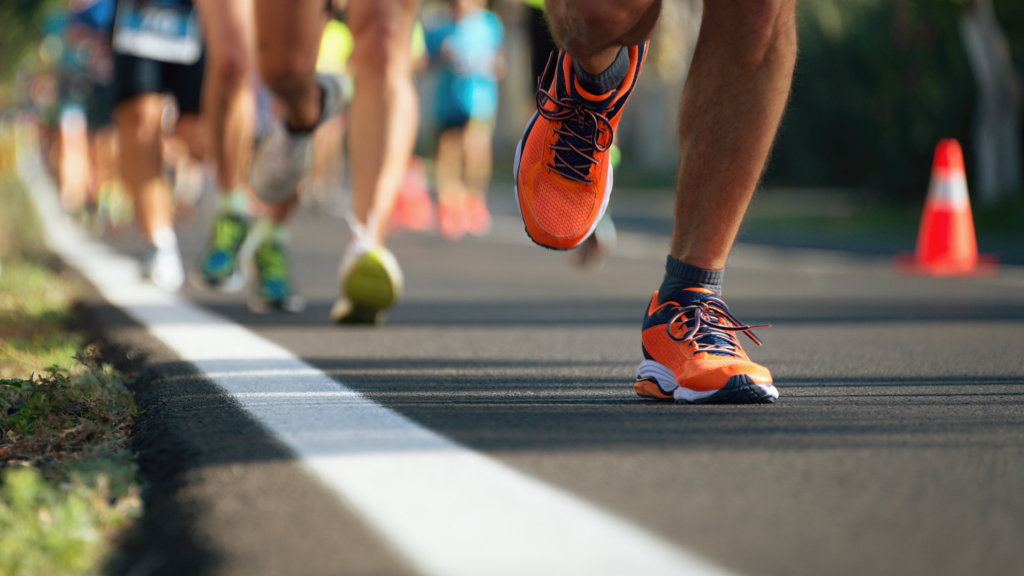
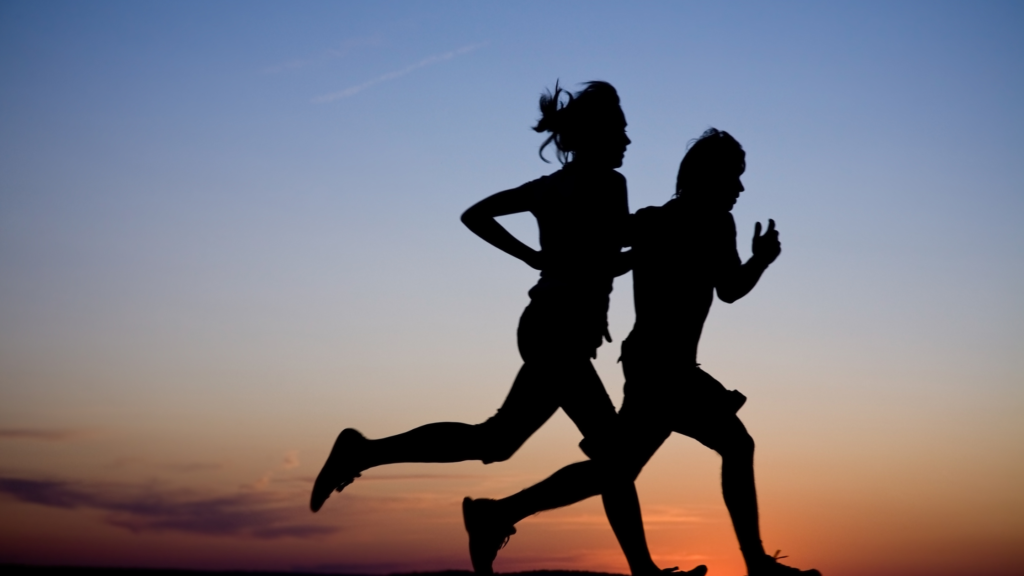
Running became my favorite way to explore new cities. It’s completely free, you can do it almost anywhere, and you get to see places tourists usually miss.
Some of my best memories from traveling are from early morning runs: watching sunrise over the Danube in Budapest, running along the beach in Bali, getting absolutely lost in the backstreets of Hanoi and accidentally finding an amazing coffee shop.
I’m not a serious runner by any means—I do like 3-5K a few times a week, nothing crazy. But it’s consistent exercise that doubles as exploration time.
Dealing With Altitude, Heat, and Pollution
The reality is that not every city is great for running. I tried running in Mexico City at 7,350 feet elevation and thought I was dying after half a mile. The air quality in some Southeast Asian cities can be brutal. Some places are just too hot and humid to run comfortably.
Adaptations:
- High altitude: slow way down, give yourself time to acclimate
- Heat/humidity: run early morning or late evening, hydrate like crazy
- Pollution: check air quality apps (IQAir is good), skip running on bad days
- Unsafe areas: stick to main roads during daylight, or hit the treadmill if your accommodation has one
Sometimes you just can’t run, and that’s fine. That’s when bodyweight workouts in your room become the move.
The Minimalist Shoe Debate
I pack light, so I’ve got one pair of running shoes that also work as my everyday sneakers. They’re not the fancy $200 marathon shoes, just decent mid-range trainers that are comfortable enough to walk in all day.
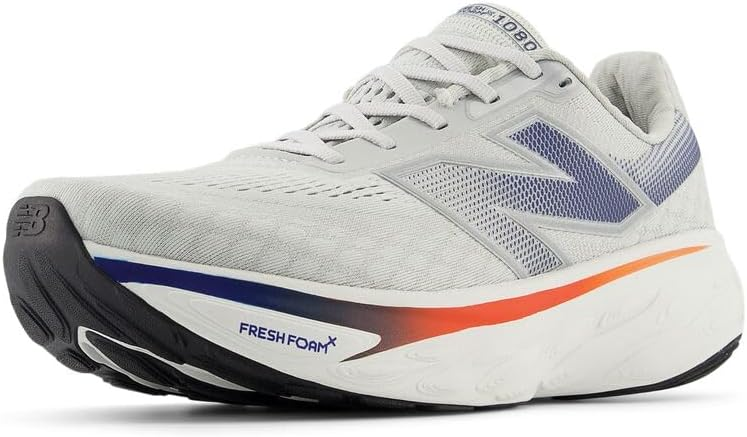
Some people swear by minimalist running or even barefoot running. I tried it on a beach in Thailand and my calves hurt for a week. Maybe I’m doing it wrong, but I’ll stick with my regular shoes.
Yoga and Mobility: Not Just for Influencers
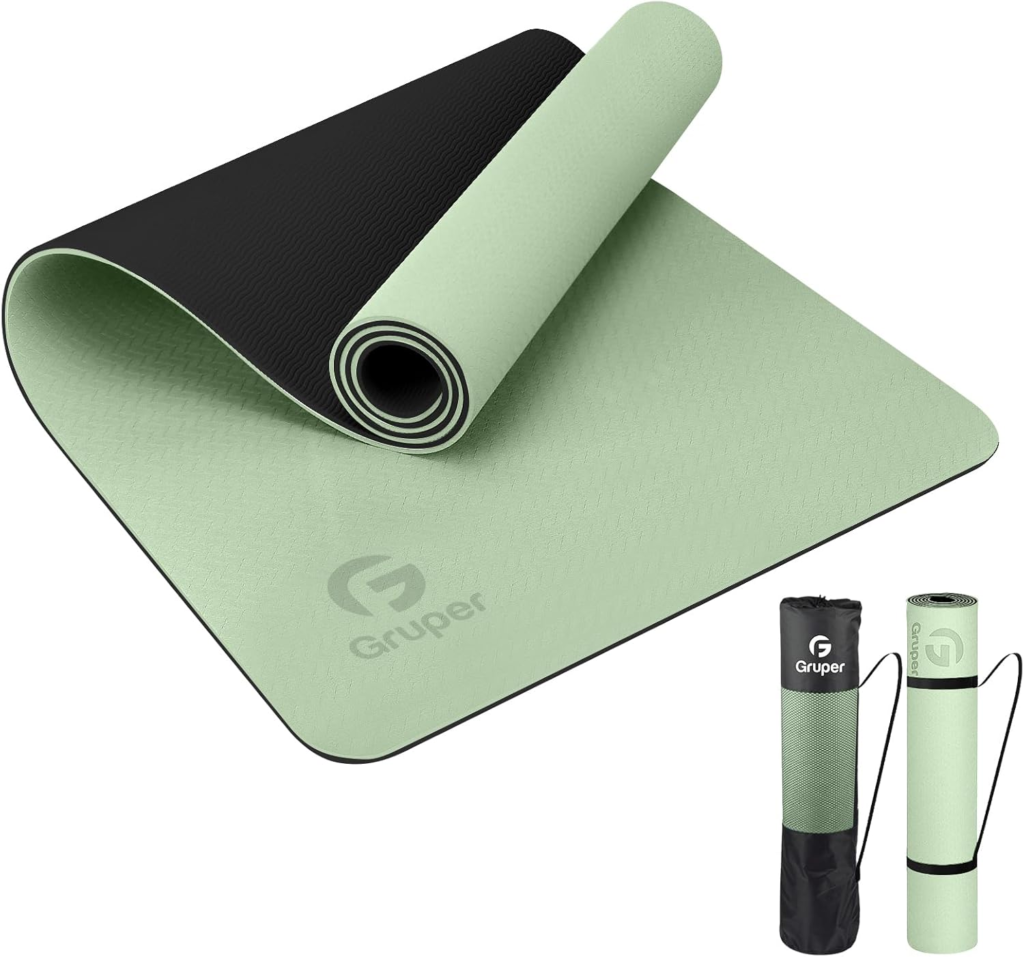
Why You Actually Need This
I used to think yoga was some wellness trend for Instagram influencers doing poses on cliff edges. Then I spent three months with constant lower back pain from sitting in terrible hostel chairs and working from my laptop for 10 hours a day.
Yoga and mobility work fixed it. Not immediately, but over time. Turns out when you sit hunched over a laptop in random cafés and on planes constantly, your body gets tight and angry.
You don’t need to become a yoga master. Even 10-15 minutes of basic stretching and mobility work makes a massive difference. I do it most mornings now, and my back pain is basically gone.
Drop-in Classes in Different Cities
A lot of yoga studios offer drop-in classes for $10-15. It’s a good way to mix things up and occasionally get real instruction instead of just following videos.
In places like Bali, Chiang Mai, or Medellín where there are tons of nomads, you’ll find cheaper classes and sometimes even donation-based community sessions. Check Facebook groups for digital nomads in whatever city you’re in—people are always posting about group workouts and yoga sessions.
Hiking and Outdoor Activities
Nature as Your Gym
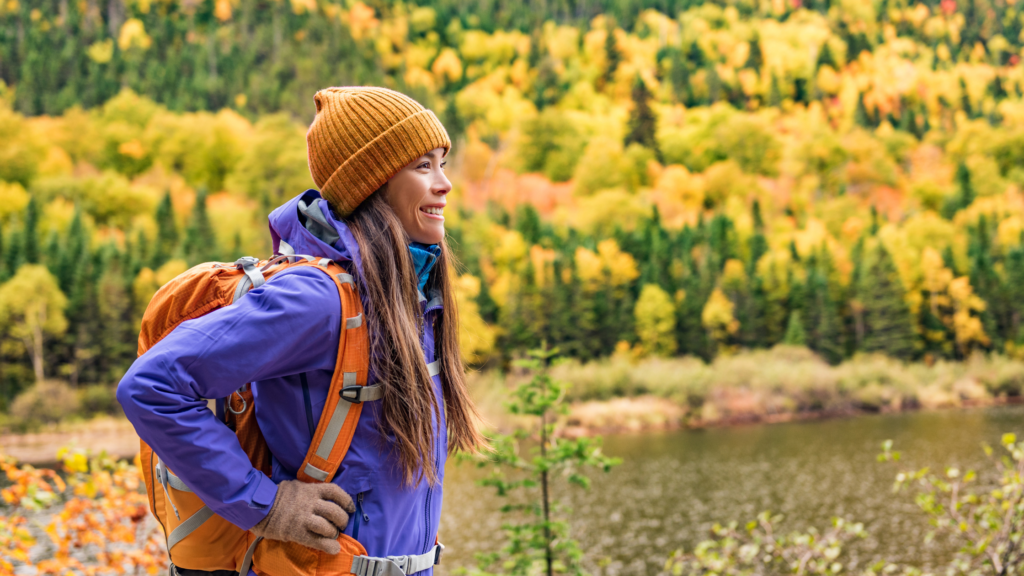
One of the best parts of the nomad lifestyle is you can choose places with amazing outdoor access. Colombia, New Zealand, Switzerland, Colorado—if you’re picking locations strategically, you can hike and explore incredible places while getting a killer workout.
Hiking is low-key one of the best full-body workouts you can do. It’s cardio, it works your legs and core, and it’s way more interesting than staring at a wall in a gym. Plus you get the mental health benefits of being outside, which is huge when you’re working remote and could easily become a hermit.
I’ve done everything from casual day hikes to multi-day treks, and even the easier trails are solid exercise. The hike up to Machu Picchu kicked my ass more than any gym workout ever has.
Surfing, Climbing, and Other Activities
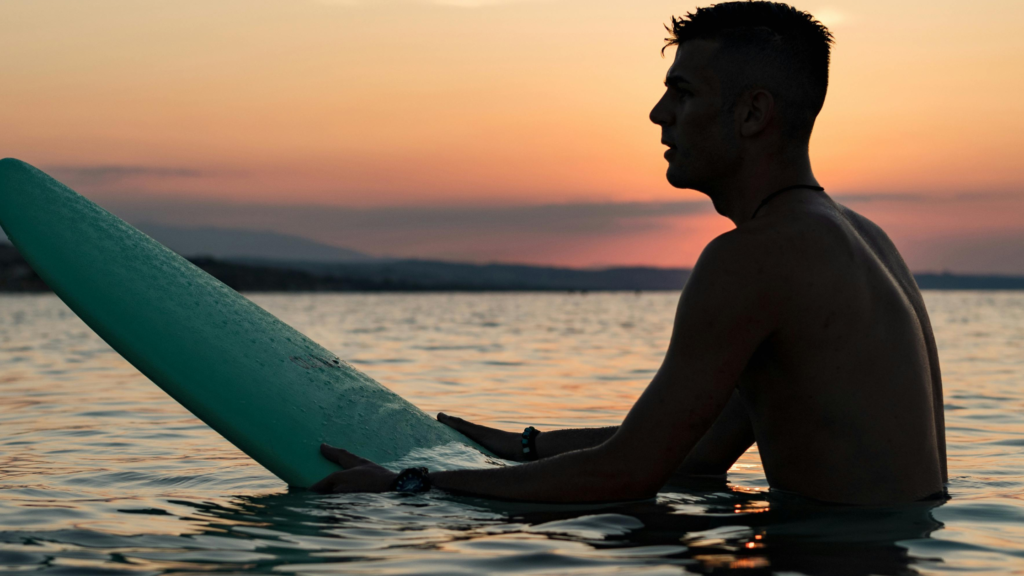
If you’re in the right places, you can pick up activities that are both fun and great exercise. I learned to surf in Portugal (barely—I’m still terrible), tried rock climbing in Thailand, and did a bunch of snorkeling in Mexico.
These aren’t consistent enough to be your only form of exercise, but they’re sick additions to your routine. Plus they’re way more exciting to tell people about than “yeah, I did pushups in my hotel room again.”
Day passes or short-term memberships for climbing gyms, surf lessons, or other activities are usually pretty affordable abroad. In Chiang Mai, I paid $25 for a month of unlimited climbing gym access. In the US, that would be like $150 minimum.
Nutrition: The Part Nobody Wants to Hear About
Street Food Is Amazing But…
Look, one of the best parts of traveling is trying new food. I’m not about to tell you to meal prep chicken and broccoli while you’re exploring Vietnam. That’s insane and you’d miss out on some of the best experiences.
But real talk: if you’re eating street food and restaurant meals for every single meal, you’re probably eating way more calories than you think, with way more oil and salt than you’d use cooking at home.
I don’t count calories or macros because that sounds miserable while traveling. Instead, I follow some basic guidelines that keep me from completely going off the rails:
- Try to get protein with every meal (not always easy, especially in some countries)
- Eat vegetables when they’re available (also not always easy)
- Don’t drink calories except for coffee (RIP to all the amazing beer I’ve missed)
- Save the super indulgent stuff for once or twice a week, not every day
Is this perfect? No. Do I stick to it 100%? Definitely not. But having some structure prevents me from eating $2 pad thai three times a day for a month straight and wondering why I feel terrible.
The Airbnb Cooking Advantage
When I’m staying somewhere for more than a week, I usually book an Airbnb with a kitchen instead of a hostel. Being able to cook even half my meals makes a massive difference.
I’m not making elaborate meals—we’re talking eggs for breakfast, simple stir-fries, basic pasta dishes. Nothing fancy. But controlling even some of your nutrition gives you way more flexibility and saves money too.
Markets in most countries abroad are incredible compared to US grocery stores, and often cheaper. Fresh vegetables, quality proteins, interesting ingredients. If you’re not taking advantage of that, you’re missing out.
The Consistency Problem
Why Routines Are Hard As A Nomad
The biggest challenge with nomad fitness isn’t finding ways to exercise—it’s staying consistent when everything in your life is constantly changing.
New city = new accommodation = new layout = different equipment access. Jet lag messes up your sleep and energy. Some days you’re exploring all day and exhausted. Other days you’re slammed with client work and stressed.
I’ve had stretches where I was super consistent for months, then I’d travel through three countries in two weeks and everything would fall apart. Then I’d spend two weeks getting back into a routine. It’s frustrating.
Systems That Actually Work
What’s helped me stay more consistent:
Time block workouts like meetings. I literally put “workout” on my calendar at the same time every day. Usually morning before I start work, because if I wait until later there’s a 90% chance something will come up and I’ll skip it.
Have a minimum viable workout. On days where I’m tired or unmotivated or don’t have time for a full session, I do a 10-minute version. Just pushups, squats, and planks. It’s not optimal, but it maintains the habit.
Track something. I use a simple habit tracker app (I like Streaks, but there are tons) to mark off workout days. Seeing a streak going motivates me not to break it. Very simple, but it works.
Find accountability. I’m in a few digital nomad fitness groups on Facebook and WhatsApp where people post their workouts. Knowing other people are grinding helps on days when I’m not feeling it.
Be realistic about travel days. When I’m flying or doing a long bus ride or just arriving somewhere new, I don’t expect to work out. Those are rest days. Fighting that just leads to guilt when you inevitably don’t do it.
The Mental Health Connection
Exercise as Therapy
Here’s something that took me way too long to figure out: regular exercise is probably the most important thing I do for my mental health as a nomad.
The digital nomad lifestyle can be isolating. You’re away from friends and family, you’re constantly in new places where you don’t have a community, you’re working alone most of the time. It’s easy to spiral into loneliness or anxiety even when you’re in paradise.
Working out gives me structure, releases endorphins, makes me feel accomplished, and forces me to take a break from staring at screens. On my worst mental health days, a run or a hard workout has pulled me out of it more reliably than anything else.
I’m not saying exercise fixes everything—I’ve definitely had periods where I needed to talk to a therapist too. But it’s a massive part of staying mentally healthy while living this lifestyle.
The Social Aspect
Group workouts, parkour sessions, pickup soccer games—these are actually great ways to meet people in new cities. I’ve made friends through finding local running groups, going to CrossFit drop-in classes, and joining pickup basketball games in parks.
It’s way less awkward than trying to make friends at bars or random social events. You’re all there doing something active, there’s a built-in conversation topic, and you see each other repeatedly if you keep going.
Real Talk: What Works Long Term
After two years of trial and error, here’s what’s actually sustainable for me:
4-5 days a week of some kind of exercise. Not six days, not seven. That’s overkill and leads to burnout. 4-5 is enough to make progress without it taking over your life.
Mix of bodyweight training, running, and mobility work. Bodyweight stuff 3x per week, run 2-3x per week, yoga/mobility most mornings for 10-15 minutes. This covers strength, cardio, and keeps me from getting injured.
Flexibility built in. Some weeks I work out six days because I’m feeling great. Some weeks it’s three days because I’m slammed with work or exploring somewhere new. That’s fine. Life happens.
Low-cost or free activities. I’m not paying for gym memberships or expensive classes regularly. Maybe occasionally for something specific, but 90% of my fitness costs nothing beyond the $20 I spent on resistance bands.
No perfection required. I eat pizza and drink beer and skip workouts sometimes. The goal isn’t to be shredded, it’s to feel good and maintain a baseline level of fitness that lets me enjoy traveling without feeling like trash.
The Bottom Line
You don’t need a gym membership to stay fit as a digital nomad. You don’t need expensive equipment, a strict routine, or perfect nutrition. You just need to move your body consistently and not use traveling as an excuse to completely abandon your health.
Bodyweight workouts in your accommodation, runs through new cities, hiking when you’re somewhere with good trails, basic stretching and mobility work—that’s the formula. It’s not complicated, it’s not expensive, and it works.
The hardest part is building the habit and staying consistent despite constant change. But once you do, you’ll feel so much better. More energy for work, better mental health, less guilt about eating all the amazing food, and you’ll actually enjoy traveling more because you’re not exhausted all the time.
Now if you’ll excuse me, I’ve got a workout to do in my 200-square-foot Airbnb in Mexico City. It’s going to be awkward, I’m probably going to hit my hand on the ceiling doing burpees, and my downstairs neighbors are going to hate me. But it beats sitting on my ass all day.
Stay active out there.
Recent Posts
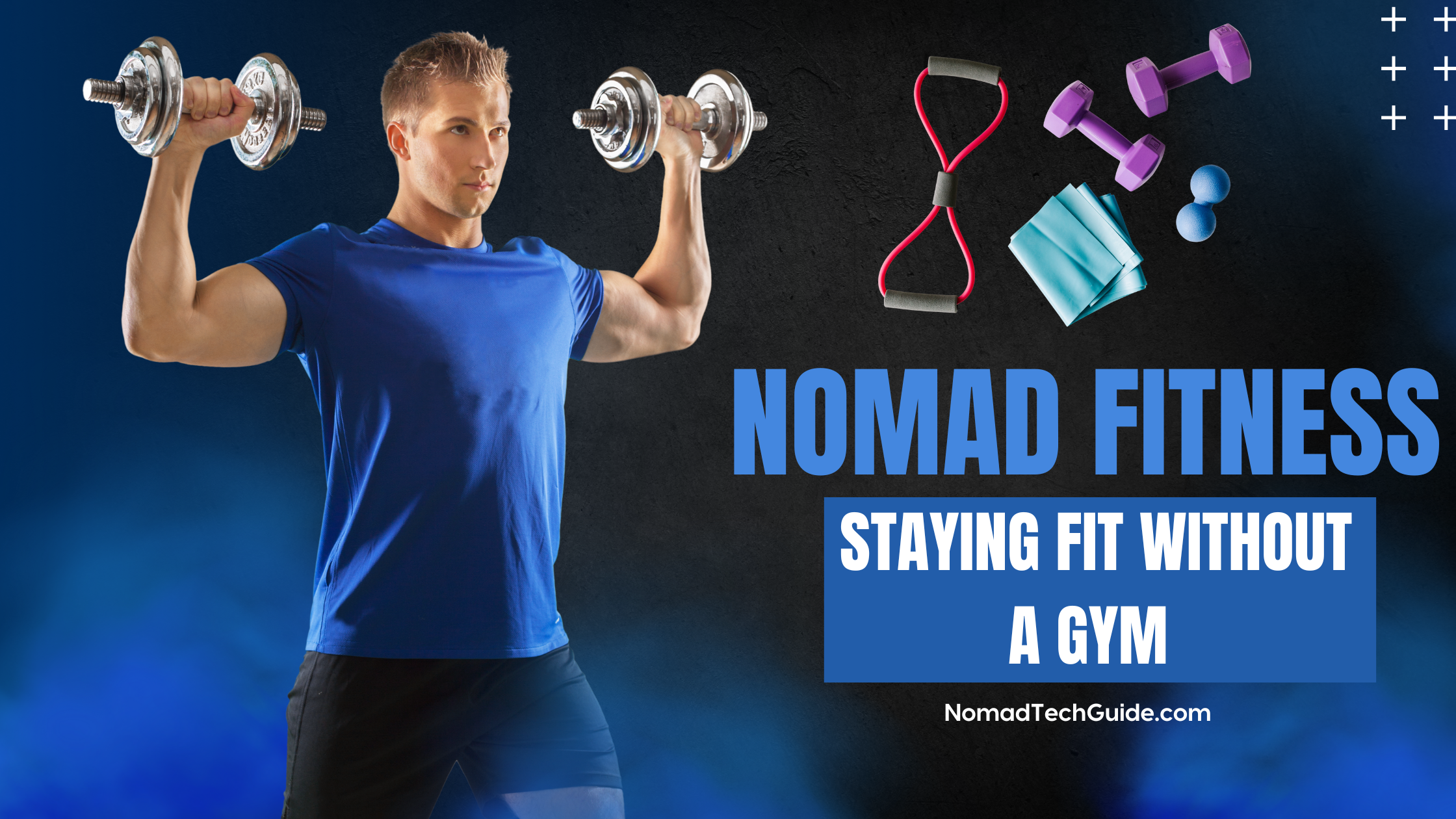
- Nomad Fitness: Staying Fit Without a Gym Membership Across 20+ Countries
- From Tech Setup to Profit: Essential Software Tools for Nomad Entrepreneurs
- Nomadic Hosting: Affordable Solutions for the Traveling Freelancer
- The Digital Nomad’s Guide to YouTube Success
- The Digital Nomad Toolkit for Affiliate Success